
mr. weldrite is a Steel fabricator establishment in Jeffreys Bay, Eastern Cape, South Africa
mr.weldrite: Steel Fabricator in Jeffreys Bay, Eastern Cape
mr.weldrite presents itself as a local steel fabrication service operating within Jeffreys Bay, in the Eastern Cape. The business appears to maintain a presence on social media, most notably via a Facebook page that showcases a gallery of photographs and a follower base, suggesting a visual emphasis on completed projects and ongoing work. While the public profile does not provide an extensive catalogue of services in a formalised statement, the category designation of the page identifies the operation as a steel fabricator, indicating a focus on metalwork and fabrication solutions generally associated with structural, architectural, or fabrication-focused projects.
Customer experiences, as reflected in the available visitor feedback, are limited but positive. A single review snippet records a five-star rating accompanied by the remark “Stunning work!” from a reviewer identified as Susan Visser, dated approximately a year prior. This brief testimonial implies a perception of high-quality craftsmanship among those who have engaged with the service, at least from the perspective of the reviewer. The absence of a broader set of publicly posted reviews means potential clients may wish to pursue additional direct references to confirm consistency across jobs and project types.
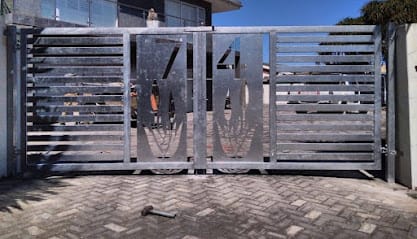
From the material visible on the page, the portfolio appears to rely on imagery rather than detailed textual service descriptions. This suggests that prospective customers may gauge capabilities by reviewing photos of completed projects, rather than relying on a written list of offerings. Such an approach is common for small or independent fabricators where visual evidence of work often communicates practical competence and finish quality to would‑be clients. The emphasis on photographs can provide insights into weld quality, fabrication finishes, and the range of sizes or styles handled, even if project specifics are not explicitly enumerated on the page.
In terms of the customer journey, the available online footprint hints at a straightforward workflow typical for small steel fabrication outfits: a prospective client reviews available imagery, or perhaps initiates contact via the page to discuss a project, obtain a quotation, and arrange site visits or drop-off/pick-up of fabricated components. Without a formal service catalogue or stated process, it is prudent for interested customers to prepare a concise brief for discussion, including project scope, required materials, dimensions, and any relevant deadlines. A direct dialogue can help establish feasibility, lead times, and pricing expectations in the absence of fixed advertised packages.
Practically useful tips for potential clients include examining the posted photos for evidence of weld consistency, machining quality, and the range of fabrication styles portrayed. When evaluating a local steel fabricator, it is sensible to request examples of similar past work, ask about material certifications where relevant, and clarify warranty or post‑sale support policies. Given the limited public information, it may also be helpful to ask for timelines, payment terms, and interim updates during longer projects to ensure alignment with project milestones.
Best‑case planning involves confirming basic operational details such as the facility’s location within Jeffreys Bay and the surrounding area served, and understanding whether on‑site installation or delivery is available. If a site visit is required, determining access requirements, safety considerations, and any permitting or code compliance factors ahead of commencing work can streamline the process. While explicit business hours are not listed on the visible profile, potential customers can expect reasonable business‑hour contact during typical local trade hours and should verify availability when making initial inquiries.
Overall, mr.weldrite presents as a local, image‑driven steel fabrication option in Jeffreys Bay, with at least one positive customer impression evident from its social media footprint. For clients seeking a small, locally oriented fabricator with a portfolio viewable through photographs, this profile suggests a practical approach to project engagement, subject to verification of service scope, capacities, and terms through direct consultation.
- Key considerations: review posted project photos, request direct references, confirm lead times and pricing, discuss material specifications and finishes.
- Practical steps: prepare a clear project brief, confirm delivery or installation arrangements, and seek clarity on warranties or post‑completion support.
- Visit considerations: verify hours and availability with the operator when planning an initial consultation or site visit; confirm service coverage in Jeffreys Bay and the broader Eastern Cape area if travel is required.
Jeffreys Bay
Eastern Cape
South Africa
Sorry, no records were found. Please adjust your search criteria and try again.
Sorry, unable to load the Maps API.
Steel Fabricator Services in Jeffreys Bay, Eastern Cape
<pSituated in the coastal town of Jeffreys Bay, Eastern Cape, steel fabricator services are an essential support for commercial, residential and agricultural projects. Local fabricators typically offer a range of capabilities that cover the complete lifecycle of steel structures and components, from initial concept to final installation. The emphasis in this region tends to be on durable, weather-resistant solutions suitable for coastal environments, as well as practical farming and building applications common to the area.
<pA core offering usually includes **structural steel fabrication** for frameworks, trusses, support columns and labour-intensive assemblies. Clients may also commission **welding and assembly** of components in steel and, where appropriate, stainless steel or galvanised steel to mitigate corrosion. Fabricators commonly provide **cutting, bending and shaping** services using saws, plasma or laser cutting, and press brakes to meet precise measurements and tolerances. This combination enables the creation of customised sections, brackets, supports and fabrications tailored to specific project requirements.
<pAnother key area involves **on-site and off-site welding**. On-site welding can reduce transportation needs and accommodate large or awkward installations, while off-site welding often allows for controlled environments, stricter quality oversight and efficient labour. With coastal exposure a consideration, many fabricators advise on practical protective measures, such as galvanising, powder coating or other coatings to resist salt-laden air and humidity. Where applicable, treatments for longevity and ease of maintenance are discussed as part of the overall project plan.
<pIn addition to fabrication, many providers extend services into **metal finishing and protection**. This frequently includes surface preparation, priming and painting, powder coating, or galvanising. These finishes aim to extend service life and maintain appearance in seaside conditions. Clients can expect attention to corrosion resistance, easy cleaning and, in some cases, low-maintenance finishes suitable for fencing, gates, staircases and architectural features common to the region.
Practical considerations play a significant role in Jeffreys Bay projects. Local fabricators commonly assess factors such as access to site for large assemblies, the availability of suitable lifting equipment, and the logistics of transporting heavy steel sections along coastal roads. Compliance with safety standards and building codes, as well as coordination with other trades, is standard practice. For waterfront or beach-adjacent installations, considerations around weather exposure, maintenance cycles and long-term protection inform design choices and material selection.
Typical project workflows involve a careful sequence: initial consultation or requirement brief, feasibility assessment, preparation of preliminary drawings or specifications, and a quotation. Upon agreement, detailed fabrication drawings are produced, followed by material cutting, fabrication, welding and assembly. Quality checks are performed at various stages, with final finishing and protective treatments applied before delivery or installation. The installation phase may require on-site fitting, anchoring to foundations, and integration with ancillary components such as handrails, stairs, gates or brackets. Scheduling often takes into account freight constraints, coastal weather windows and site access to minimise disruption.
For prospective clients in Jeffreys Bay, expectations typically include clear communication on timelines, material options, and maintenance considerations. While specific capabilities vary between workshops, the emphasis remains on delivering sturdy, well-finished steel solutions that meet functional requirements and local environmental conditions. Clients are advised to discuss anticipated loadings, corrosion risks, and anticipated maintenance with fabricators early in the process to ensure the most suitable material and protective strategy are selected.